Energy Efficiency
September 2, 2026
4 min read
Double Pane vs. Triple Pane Windows:
Which Is Right for Alberta?
Double pane vs. triple pane windows in Alberta: R-value, real cost difference, payback in a Bow Valley winter, and how chinook pressure cycles affect seals.
The Short Answer
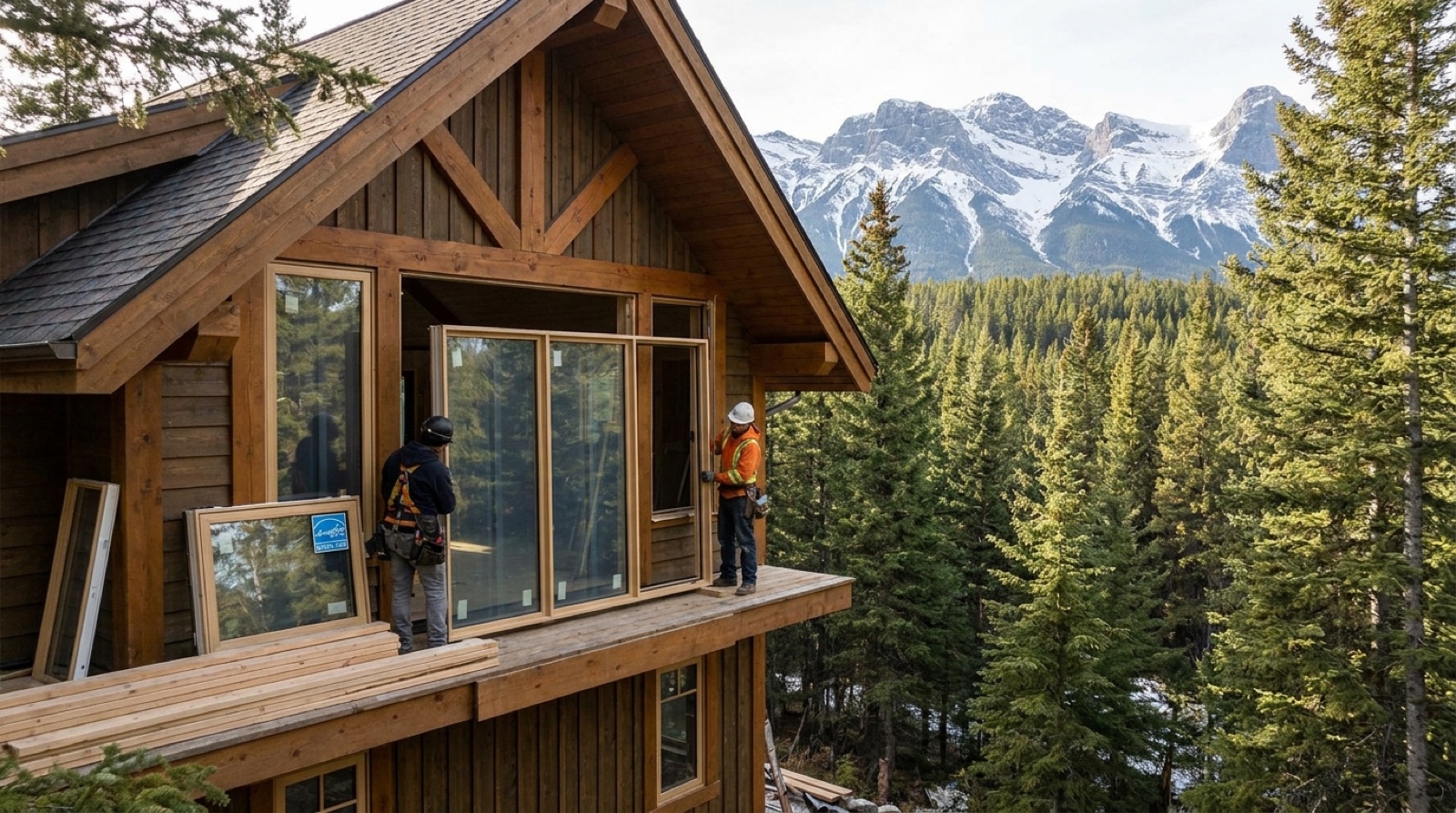
For most heated living space in Alberta, triple pane is the better buy. The third pane adds a second insulating cavity, and that roughly doubles the glass performance of a standard double pane unit in a climate that spends five months below freezing.
Double pane is not obsolete. A quality double pane unit with a low emissivity coating and argon fill still makes sense in unheated shops, three season spaces, and budget limited phases of a larger project.
R-Value and U-Factor: Reading the Sticker
Windows are rated by U-factor, which measures how fast heat escapes. Lower is better, and R-value is simply the inverse of that number.
Manufacturers love to quote centre of glass R-value because it is the flattering number. The figure that predicts your gas bill is the whole window U-factor, which includes the frame and the spacer.
| Glazing | Centre of glass R | Whole window U | Best use |
|---|---|---|---|
| Double pane, clear, air fill | R-2 | 0.45 to 0.50 | Sheds and unheated space only |
| Double pane, one low emissivity coat, argon | R-3.2 | 0.28 to 0.32 | Garages, seasonal cabins, budget phases |
| Triple pane, two low emissivity coats, argon | R-5 to R-6 | 0.18 to 0.22 | Standard for Bow Valley homes |
| Triple pane, krypton fill, warm edge spacer | R-7 or better | 0.14 to 0.17 | North walls, high performance builds |
Comfort is the part nobody rates
A double pane window sitting in minus 25 weather runs an interior glass surface around 6 to 9 degrees. Triple pane holds that surface closer to 14 degrees.
That difference is why you stop feeling the cold draft that rolls off a window even when the seals are perfect. It is not a draft at all, it is convection off cold glass.
What the Upgrade Actually Costs
Triple pane typically runs 10 to 20 percent more per opening than a comparable double pane unit from the same line. On a full house project that is usually a few thousand dollars, not a doubling of the quote.
The premium narrows further on large fixed units and widens on small operating windows, where the frame is a bigger share of the price. Ask for both numbers when you plan a whole home window replacement so you can see the real spread rather than a rule of thumb.
Payback in the Alberta Climate
Canmore sits above 1,300 metres and collects roughly 5,500 to 6,000 heating degree days a year. Banff and Exshaw are similar, and Cochrane is only modestly milder.
That is a lot of hours pushing heat through your glass. In a home with 15 to 20 windows, moving from decent double pane to triple pane commonly trims 5 to 10 percent off annual heating cost.
Simple payback on the upgrade portion alone often lands in the 10 to 15 year range. The honest framing is that triple pane rarely pays for itself in gas savings alone, but it does when you count comfort, resale, condensation control, and the rebates covered on our energy efficient window options.
Chinooks and Pressure Cycling
The Bow Valley can swing 25 degrees in a single day when a chinook arch builds over the ranges. Every one of those swings expands and contracts the gas sealed between the panes.
That flexing is called pressure cycling, and it is the main thing that kills a sealed unit early. Glass bows inward on cold snaps and outward on warm ones, working the perimeter seal thousands of times over a window's life.
Two things that matter more than pane count here
- Spacer type. Warm edge stainless or structural foam spacers flex without fatiguing the way old aluminum boxes do.
- Altitude compensation. Units built near sea level and shipped to 1,400 metres need capillary tubes or an adjusted fill, or they arrive already stressed.
Ask any supplier how they handle altitude for Canmore and Banff addresses. A vague answer is a reason to keep shopping.
Weight, Hardware and Frames
A triple pane unit weighs roughly 40 to 50 percent more than the double pane equivalent. That load goes straight into the hinges, the operators, and the frame corners.
It matters most on wide swing units, which is why heavy duty hardware is standard on our casement installations. It also affects sliding patio units, where an undersized roller on a triple pane panel starts dragging within a few seasons.
When Double Pane Is the Right Call
- Detached garages, workshops, and storage buildings
- Seasonal cabins that are shut down through the deep winter
- Existing frames that cannot carry the added weight without reframing
- Staged projects where you replace the worst north and west elevations first
Splitting a project by elevation is a practical middle ground. Put triple pane where the weather hits and where you sit, and hold the line on the rest until the next phase.
Making the Call on Your Home
Look at orientation, exposure, how long you plan to stay, and whether the frames are staying or going. A south facing sunroom in Cochrane and a north wall in Canmore do not need the same answer.
If you want the numbers for your specific openings rather than a general rule, get in touch for a quote and we will price both glazing packages side by side.
Price Both Options Before You Decide
We quote double pane and triple pane side by side for your exact openings, no guesswork.