Alberta Climate
August 5, 2026
5 min read
What Canmore's July Grass Fire Says
About the Glass in Your Windows
A July fire inside Canmore town limits was out fast. Here is why your window glass, not your siding, is the part FireSmart worries about most.
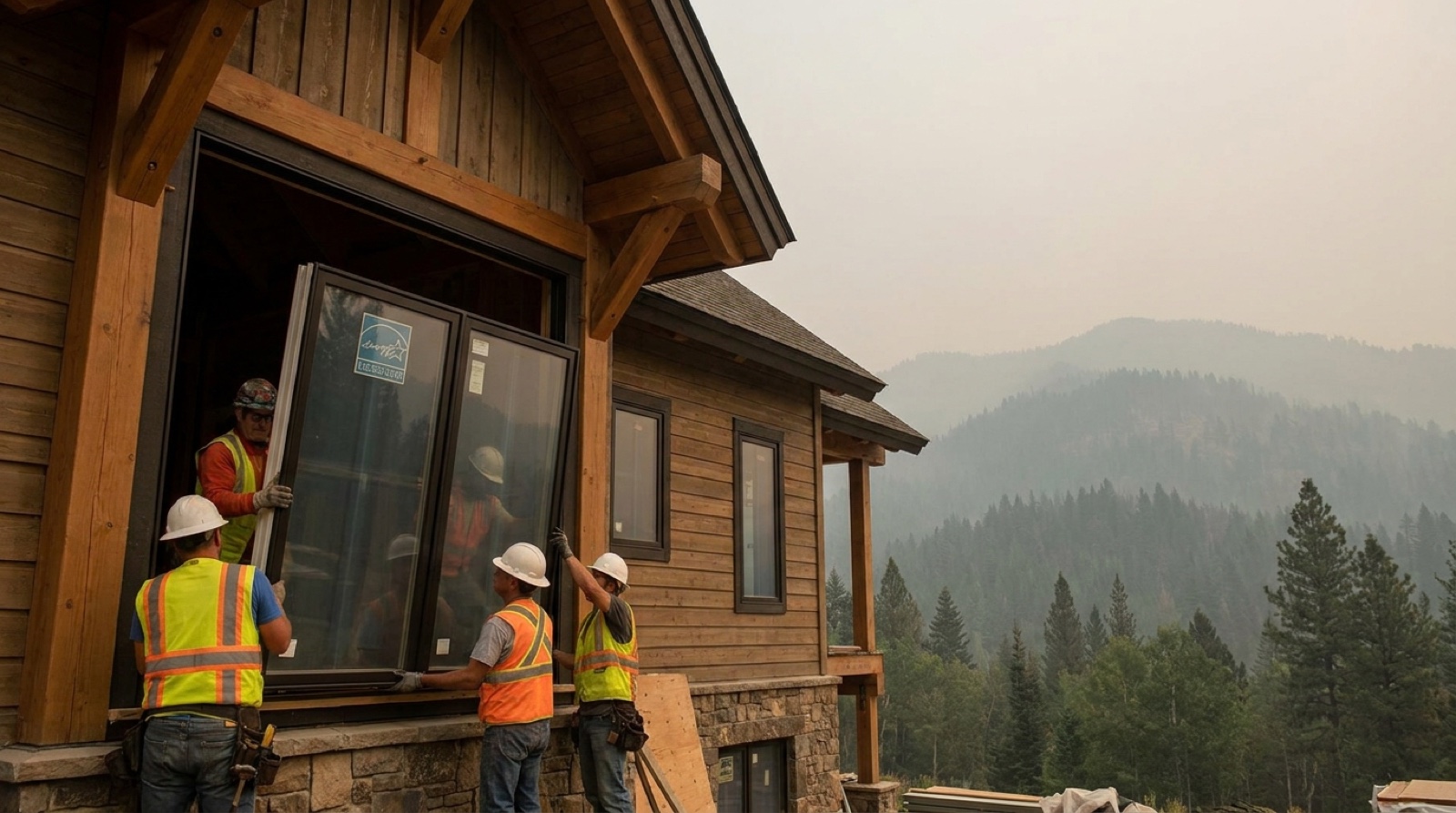
Window glass is usually the first part of a house to fail during a wildfire, and it often fails before the wall around it ever ignites. Once the glass breaks, embers and superheated air get inside, and the fire has a room to work with instead of a wall to climb.
That matters in the Bow Valley more than most places in Alberta. Homes here sit directly against forest and grass fuel, and the ignition does not have to start on your lot to reach your windows.
The fire that makes this worth revisiting
On July 22, Canmore Fire-Rescue responded to a fire on provincial land inside the municipal boundary, in a small stand of trees roughly five metres from the river shore. Crews were on scene by early afternoon with support from Alpine Helicopters, which dropped six loads of water, and Alberta Wildfire.
The burn came in at under 0.1 hectares, and the Town confirmed there was no risk to the wastewater treatment plant, power lines or other critical infrastructure. The full account is in the Rocky Mountain Outlook report on the response.
Nothing about that afternoon was a crisis. It was a small, well handled incident that happened to prove a point most residents already know, which is that ignitions occur inside the townsite and not only out in the backcountry.
Why glazing is the weak link
FireSmart Canada is unusually blunt on this subject. Single pane glass is highly vulnerable to breaking under the radiant heat a wildfire produces, multi-pane units perform better, and tempered glass is the least vulnerable of the three.
Radiant heat does not require flame contact to do damage. A fire burning at a distance can heat glass unevenly until it cracks, and a cracked pane stops being a barrier.
| Glazing | Relative vulnerability | Practical note |
|---|---|---|
| Single pane | Highest | Common in older Canmore cabins and unheated additions |
| Multi-pane sealed unit | Moderate | The standard on most replacement work today |
| Tempered | Lowest | Worth specifying on exposed elevations |
The upgrade path here is refreshingly simple. Most homeowners doing a full window replacement in an older mountain home are already moving off single pane, which means the biggest gain happens by default.
Screens are not decorative
FireSmart also recommends keeping window screening installed, for two separate reasons. Screens improve how the assembly holds up to radiant heat, and they cut down the size and number of embers that can get through a broken or open window.
Plenty of people in Canmore pull their screens off for a clearer mountain view and never put them back. That is a fair trade to make on a north facing bedroom and a poor one on the elevation facing open forest.
Big glass deserves more thought
Large panes are more exposed than small ones, simply because there is more surface for heat to work on. That is not an argument against view glass, and nobody buys in the Bow Valley to look at a wall.
It is an argument for being deliberate about specification. If a wall of fixed picture glass faces the treeline, that is the elevation where tempered units and intact screens earn their keep.
The overlap with energy performance
Here is the part that makes this an easy decision rather than a grudging expense. Almost everything that makes a window more resistant to radiant heat also makes it better in a Canmore winter.
Sealed multi-pane units, tight frames and good glazing seals all pull double duty. Homeowners weighing higher performance glazing packages for heating cost reasons are usually improving wildfire resilience at the same time without planning to.
The reverse is also true. A window with a failed seal or a cracked pane is losing heat in January and is a weaker barrier in July.
What to actually check this month
- Identify which elevations face open forest, grass or slope, since those are the ones under real exposure.
- Confirm whether any remaining single pane glass is still in service, especially in garages, porches and older additions.
- Put screens back on the exposed elevations and check them for tears.
- Look for cracked panes, fogged sealed units and gaps at the frame, and get them handled before they become a replacement.
- Make sure windows can actually close and latch, because FireSmart advice includes closing them when a fire threatens.
That last one catches people out. A sash that has dropped, swollen or lost its hardware is a window that cannot be shut when it counts, and a straightforward repair on a sticking or failed sash fixes it well short of a full replacement.
Use the free assessment the Town already offers
Canmore is a FireSmart community and Canmore Fire-Rescue offers free FireSmart home and property visits, with FireSmart Canada 101 training as a prerequisite for homeowners and condo board members. Details are on the Town of Canmore FireSmart page.
Assessments pause over winter and resume once the snow is gone, so early August is close to the ideal window to book one. Get the assessment, find out which elevations are the problem, then spend money in that order.
If that assessment points at your glazing, we work across Canmore, Banff, Exshaw, Cochrane and the rest of the Bow Valley, and you can get in touch for a quote on the exposed elevations rather than the whole house at once.
Fix the Exposed Glass Before Next Season
We will walk your property, flag the elevations that matter and quote only what needs doing.